3
Showing posts with label Alfred Hitchcock. Show all posts

Thursday, October 21, 2010

Kim Novak...sex siren diagnosed with breast cancer! Prognosis great!


Sex symbol - Kim Novak - has been diagnosed with breast cancer.

However, in the wake of the announcement, doctors stressed that her prospects for recovery are quite good because the cancer was caught early.

Ms. Novak - one of Hitchcock's favorite actresses (who starred in the classic thriller Vertigo) - is 77 years young.

The legendary star - who boasts co-star status with the likes of screen greats such as Jimmy Stewart, William Holden, and Kirk Douglas - allegedly keeps in shape by maintaining a 3-day regimen at a gym rigorous horse-regular back riding.

Ms. Novak currently resides in the picturesque climbs of Oregon where she and her husband raise llamas.

Just recently, Ms. Novak delighted fans when she appeared at an unveiling of a DVD collection of her work in Hollywood.

The talented actress - a cool sultry blond - was a stunning beauty in her day ranking right up there with legendary sirens such as sexpot Brigitte Bardot and sensual Marilyn Monroe.


http://www.thetattler.biz

Thursday, September 2, 2010

The American...George Clooney excels in thriller! Morality tale with Hitchcock undertones!


Occasionally, a compelling film with thought-provoking masterful celluloid strokes splashes across the silver screen, and subsequently, resonates with an audience (in spite of the fact it’s not a typical Hollywood-style big-budget smash-up or special effects CGI masterpiece crafted to dazzle and delight).

The American - a Focus Pictures production - uniquely fits the mold.

The thriller (starring a charismatic salt & pepper George Clooney) unravels slow and sure in the breath-taking opening scenes - then, quickly - kick-starts into high gear (in part) due to a series of spine-tingling plot twists that erupt unexpectedly out-of-the-blue.

Suddenly, the theatre-goer (on the edge of his or her seat by now), is propelled forward into the action for a wild ride that is not always gauged by tail-spin turns, screeching tires, or a bloody body count.

In fact, the American is a remarkable film in many respects, because of what it is not.

The scriptwriter (who adapted a best-selling book here) wisely chose not to rely on gimmicks (what has gone before) to appeal to the commercial mainstream - and in the process - avoided tired old clichés and stale plot scenarios to avoid breathing artifical life into what amounts to a gem of a movie.

Personally, I stared up fom the below the footlights and savored every deft Hitchcockian moment that happened along, totally absorbed.

In fact, each frame was not unlike a unique piece of a film puzzle - that eventually snapped  into focus just before the ending - when it dawned on the viewer that "The American" was a subtle morality tale along the old-fashioned traditions of spell-binding meticulous story-telling of yesteryear.

In a nutshell, Clooney’s character is an International spy - of sorts - forced to come out of hiding when a nasty posse of cut-throat killers are hired to terminate him.

In a sub-plot, the screenwriter fleshes out the tortured soul of a complex man - who is at times driven - by exotic sensual tastes as he yearns for intimacy late in life.

In spite of his normally-cool reserve and remarkable self-control in the dangerous high-stakes arena of espionage - in contrast - endless nights alone without companionship (he's an outsider who has been unable to savor the spoils of his success) have taken their toll.

Unlike studio honchos that often rely on formula - with a big dose of style over substance tossed in for good measure to seduce the hapless film buff -  the producers here rely on the intelligence of the sophisticated film enthusiast to fill in the gaps.

The strategy appears to be working - if the turn-out this afternoon in downtown San Francisco - is any indication.

Although the Clooney film was released today - mid-week on a Wednesday afternoon without a lot of frenzied fanfare - excited fans abandoned chores at home and loose-ends on work deadlines at the office to steal into the theatre to catch the flick before the dinner hour.

That's star-power, alright!

The icing on the cake?

Half-naked footage of Clooney reveals the hunk is still at the top of the heap in the stud department, too!

I wouldn't kick him out-of-bed for eating crackers, that's for sure!


Clooney character crafts high-powered rifle for Assassin!

Sunday, May 9, 2010

Asian Pacific Film Festival...ends on sour note! Asian actors put down Industry! Volunteers rude to press! Magdael ignores guests...


Justin Chon slams casting office!


Asian Actors scoffed at the Industry's perception of their community at a panel discussion, volunteers were rude to the press, and PR rep David Magdael snubbed invited guests.

For obvious reason, the Los Angeles Asian Pacific Film Festival came to a close on a sour note!

The expectations were high during the week - when ticket sales soared, upscale guests toasted each other at glittering parties, and a handful of glowing press clips boosted the status of the 26th annual event which kicked off  at the DGA in Hollywood on April 29th.

Over the past couple of years - and at a panel dicussion today - Asian actors and filmmakers belly-ached that the mainstream Hollywood dream factory didn't  take them seriously (which I found ironic).

In spite of the fact individuals like myself in the press have attempted to put a spotlight on the festival - with the ultimate aim of lending some credibility and relevance to their annual event - the Asian community has continued to remain insulated.

In fact, at a couple of the Q & A sessions, a handful of Asian organizers persisted with their theory that in the Asian community - unlike in others - there was only one degree of separation.

On this bold assumption, they took a leap, and asserted that their ties were closer-knit with their own kind than those of other races.

Subsequently, attitude reared its ugly head!

Indeed, when white folks - or members of other races attended the Festival events - they were often treated like "outsiders".

In a nutshell, the Asian Community has brought its woes upon itself.

Slaps at the mainstream Industry today - that Asian artists struggle so desperately to be a part of - didn't help matters much.

One actor snidely remarked to a full house at the Independent Theatre - that before auditions - Actors had to practice their Asian accents in order to land the job.

Ouch!

Another young Hollywood hopeful - who boasted a role in Twilight (Justin Chon) - accused the Jackass casting directors of shutting Asians out.

"I was willing to take even a small part in the film, but they told me they were going all white," he lamented in so many words.

From where I stood, the wild notion appeared preposterous, on its face alone.

In the past I have not only been a casting director, but a theatrical agent, too.

I've never witnessed that kind of alleged discrimination ever.

Type-casting - on the other hand - yes!

One naive dancer claimed that when she attended an audition, each race - African-American, Asian, Latino - was separated into groups.

Then, a candidate or two was selected from each.

I've been in the business for over thirty years, and attended hundreds of auditions, and I have never encountered that kind of casting process based on race.

Sounded like a tall tale to me.

Drama Queen!

When she quipped a moment later - that she felt like a piece of meat - it was obvious to me the gal was an inexperienced wannabee totally clueless about the nature of the beast.

Alfred Hitchcock said it best:

"Actors are just cattle."

Move along, little doggie.

One member of the Press stepped out of a movie line for one second to snatch up a treat, and ended up being rudely pulled out of his spot when he returned a second later, because a stupid ill-mannered volunteer wasn't paying attention.

Anyone can make a silly mistake, but it was the way the inexperienced loser handled the matter, which was outrageous.

Did he apologize?

No, of course not.

A organizer at an event should treat each individual with dignity and respect.

For a Festival that claims to be sophisticated and classy, the Asian Pacific stooped to an all-time low!

On Thursday night, David Magdael (normally congenial) snubbed red carpet attendees.

This afternoon, he ignored invited guests, too.

Guess he figured he made it through the gate and there was no need to hold up the plastic mask with the sardonicus smile to the thronging festival-goers any longer.

Wrong!

The words to a Beatle's song ring out loud and clear:

"I'm looking through you, where did you go?"


Director Ang Lee managed to crack U.S. market!
(with talent not by grumbling)


Monday, January 18, 2010

San Francisco...chattering birds a sign! Storm warning...


The other night I strolled out of the Embarcadero shopping mall and suddenly found myself on the edge of a well-manicured little park off of a sidestreet.

When a bronze sculpture caught my eye in the distance, I proceeded to head in that direction in order to inspect the artwork up-close.

As I drew near, hundreds of birds alighting in the branches of trees all above me, began to chatter quite excitedly.

In fact, at one point, an eerie feeling swept over me.

The scene was reminiscent of one from Alfred Hitchcock's horror thriller "The Birds".

Fortunately, I am familair with signs and portents in nature.

When birds slightly alight (or hover) in the sky - and chatter incessantly in the branches of the trees overhead - it is usually a warning of inclement weather or the eruption of some other force of nature (such as an earthquake).

In fact, if you pay keen attention to your own pets - or wild animals in the vicinity of your neighborhood - oftentimes they'll tip you off that some unexpected natural event may be on the horizon.

Sure enough, after I witnessed the bird phenomenon the other night, a huge storm blew into town.

Uncanny!

Birds Chattering (San Francisco)

http://www.youtube.com/watch?v=dHJwDx2sz2I&feature=player_embedded

http://www.youtube.com/watch?v=Ij_cITqb9r4


Monday, October 6, 2008

Alfred Hitchcock...post on film style translated by site visitor into foreign language! Curious...

希区柯克...影片风格和技术规定除了导演!
July 7, 2008 by julianayrs 08年7月7日由julianayrs


Recently, I attended a screening of a retrospective of a young director’s work, and found myself comparing the artist’s filmic style to Hitchcock’s - a compliment - to be sure.最近,我参加了一个放映了回顾一个年轻的导演工作,并发现自己比较艺术家的电影风格,以希区柯克的-是一种恭维-确定。

What makes a film decidedly Hitchcockian in nature?是什么让电影果断Hitchcockian性质呢?

The way a location is used, for instance.方法的位置使用,例如。

Hitchcock was a firm believer that if a director had a distinctive setting - it should be dramatized and become indigenous to the whole picture - not just remain in the background.希区柯克是一个坚信,如果一个主管有独特的设定-它应该是戏剧,成为土著人的全貌-不只是留在背景。

An exemplary example of this was in the intense drama, “Foreign Correspondent”.堪称典范的例子,这是在激烈的戏剧, “外国记者” 。

The tale was set in Holland.故事设在荷兰。

What was the prominent characteristic in the landscape the auteur chose to weave into the storyline?是什么突出特点的景观的导演选择编织成的故事?

Ah, the windmill.啊,风车。

In one key scene, the character astutely notices that when his hat blows off - it does so in the direction of the wind - the opposite way the arms of the distinctive Dutch landmark were turning.在一个关键的现场,敏锐的性质告示,当他的帽子打了-它这样做的风向-相反的武器荷兰的独特标志的转折点。 It suddenly dawns on the lead character that the odd reaction to this natural force of nature is a secret signal to conspirators.这突然到来的主角是古怪的反应自然力量的性质是一个秘密的信号阴谋。

Pure genius on the part of Hitchcock, eh?纯粹的天才的一部分,希区柯克,嗯?

Placing an ordinary person in extraordinary circumstances was a common element of Hitchcock’s scenarios, as well.把一个普通人在特殊情况下是一个共同的因素希区柯克的情景,以及。

In - “The Man Who Knew too Much” - an ordinary man from Indianapolis is vacationing in Morocco when his son is kidnapped.在-“的擒凶记” -一个普通的人从印第安纳波利斯是在摩洛哥度假时,他的儿子被绑架。

In - “The Wrong Man” - Henry Fonda is arrested for a crime he didn’t commit.在-“错误的人” -亨利方达被逮捕的犯罪行为,他不承诺。

Also, Janet Leigh is an ordinary secretary whose plans are violently interrupted by a schizophrenic, in the outstanding spine-tingler - “Psycho”.此外,珍妮特李是一个普通的秘书,其计划是粗暴打断了精神分裂症,在悬而未决的脊柱,心惊肉跳-“心理” 。

Mistaken identity (or the loss of one) was a common plot device in the English director’s films, too.误区身份证(或损失之一)是一个共同的阴谋装置在英文导演的电影,太。

For example, in “North by Northwest” the lead character Roger Thornton is mistaken for a non-existent CIA agent.例如,在“北西北”的主角罗杰桑顿是错误的不存在的中央情报局特工。

In “Vertigo” - in a clever twist - the intriguing plot revolves around actor James Stuart’s investigation of a woman (Kim Novak) and her elusive identity.在“眩晕” -在一个聪明的扭曲-耐人寻味阴谋围绕着演员詹姆斯斯图尔特的调查一名女子(金诺瓦克)和她的难以捉摸的身份。

Hitchcock also leaned toward the use of suspense over surprise in his films.希区柯克还俯身对暂不使用的惊喜在他的电影。

If he relied on a jolt last minute, the director felt that was tantamount to simply banging the audience over the head with frightening things.如果他依靠颠簸最后一分钟,导演认为,无异于仅仅敲打观众的头与可怕的事情。 Not very inventive, according to Hitch.不是很发明,根据故障。

With the tools of suspense, on the other hand, the legendary director argued that he could reveal things to the filmgoer which the characters in the film did not know, and then artfully build tension as the characters began to learn the truth as it unfolded.随着工具的悬念,另一方面,著名的导演认为,他可以揭示事物的filmgoer的字符在影片中不知道,然后巧妙地建立紧张的字符开始了解真相,因为它展开。

He was also fascinated by imagery and often used repeating themes.他还迷上了图像和经常使用重复的主题。

For example, stairwells often played a central role in Hitchcock dramas.例如,楼梯间往往发挥着核心作用,希区柯克电视剧。

In Hitchcock’s first movie - “The Lodger” - he tracked a suspected serial killer’s movements on a staircase with diabolical effect.在希区柯克的第一部电影-“的房客” -他跟踪一宗怀疑连环杀手的变动对楼梯与凶残的效果。

Meanwhile, in “Psycho” several staircases were featured prominently; on the path up to the Bate’s mansion and at the entrance to the fruit cellar, for instance.与此同时,在“心理”的楼梯有几个突出;的道路上到贝特官邸并在入口处的水果窖,例如。

And, who could forget the actual movie with the image in the title, “39 Steps”?而且,谁可以忘记的实际影片中的形象的名称, “ 39步” ?

“39 Steps” is arguably Hitchcock’s best British film. “ 39步”无疑是希区柯克最好的英国电影。

The compositions on-screen were remarkable, too; undoubtedly influenced by the great German and Russian filmmakers of an earlier era.组成屏幕上的显着,太;无疑影响的伟大的德国和俄罗斯电影的早期时代。

The camera often angled up and down, cut off faces, and framed action in highly-unusual stunning and dramatic ways.该相机往往直角向上和向下,切断的面孔,并制定行动高度不寻常的惊人和富有戏剧性的方式。 A style of filmmaking European directors were well-known for.风格的欧洲电影导演是众所周知的。

Hitchcock also got a perverse thrill out of taking audiences on a voyeuristic roller-coaster ride.希区柯克也有有害刺激的考虑受众的偷窥过山车旅程。

In “Rear Window”, as James Stewart’s character stares across the courtyard at his adversary for most of the film - without the subject being none-the-wiser - the filmgoer titters over the intrigue on the sidelines.在“后窗” ,因为詹姆斯斯图尔特的性格盯着整个院子在他的对手的大部分电影-无主题被无的,明智的-在f i lmgoerti tters的阴谋的观望态度。

Then, he used an unexpected element of surprise to jolt the viewer out of their seats.然后,他用一个意想不到的出奇不意,以颠簸观众离开自己的座位。

The audience is thrown - and literally gasps out loud - when Raymond Burr’s character suddenly ( without warning) turns his face to the camera and pointedly asks,观众投掷-和字面大声惊叹-当雷蒙德伯尔的性格突然(不含警告)把他的脸的摄像头和尖锐地问,

“What do you want of me?” “你要什么的我吗? ”

In another instance in “Psycho”, the camera zeroes in on a hotel-room window, through which the audience is first introduced to Marion Crane and her divorced boyfriend, Sam Loomis.另一个例子是在“心理” ,相机零在一家酒店房间窗口,通过它的观众是第一次介绍给马里昂起重机和她离婚的男友,三卢米斯。

The characters are partially undressed.人物部分脱光衣服。 Subsequently, Marion and Sam, ended up titillating the filmgoers - who surmised from snatches of clues in the frame - that the two characters had been engaged in a passionate sex romp on their lunch break.随后,马里昂和萨姆上涨titillating的电影-谁推测从片段的线索在画面-这两个字符已进行了热情的性别欢蹦乱跳的午餐休息。

Later, in the same psychological thriller, Norman Bates delights in secretly watching Marion undress through a concealed peephole in the wall.后来,在相同的心理惊悚片,诺曼贝茨在秘密欢乐观看透过马里昂脱衣隐蔽窥视孔壁。

Hitchcock’s films were regarded as highly sexed.希区柯克的电影被视为高度夸大。

And, the English director often dealt with taboo subjects.此外,英文导演往往处理的禁忌议题。

Sometimes, due to the conventions of the day, sexuality was cloaked in a symbolic fashion.有时,由于公约的一天,性行为是掩盖在一个象征性的方式。 For example, in one classic scene, the shot cuts abruptly from two aroused lovers to a train entering a tunnel in the next.例如,在一个典型的现场,突然开枪削减从两个引起爱好者的列车进入隧道在未来。

In fact, Hitchcock found a number of ways to convey sexuality without depicting it graphically; for instance, he inferred explicit sexual craving with the passionate consumption of food.事实上,希区柯克发现了一些方式转达性行为没有它生动地描绘,例如,他推断出明显的性渴求与热情消费的食品。

In an amusing scene in “Psycho”, Anthony Perkins carries on a conversation with Janet Leigh while one of his hands strokes a dead animal and the other lingers on his crotch suggestively在一个有趣的场景在“心理” ,安东尼柏金斯进行对话与珍妮李之一,同时他的手杆死动物和其他不散他的裤裆联想

When it came to casting, the celebrated director was a firm believer in selecting unknowns for lesser roles, and for good reason.当它来铸造,著名导演坚信选择未知较轻的作用,并有充分理由的。

Sure, he understood the need for star recognition and box office appeal and the value of high-calibre actors to the success of a film; but, felt the smaller parts - the cameo gems - should not be inhabited by faces that were recognized by the movie-going public at the local theatre.当然,他的理解,需要承认和明星的票房吸引力和价值的大口径者成功的一部影片,但是觉得较小的部分-在客串的瑰宝-不应该居住的面孔,是公认的观众在公众地方戏剧。

This approach lended more credibility to the project, he felt.这种做法lended更可信的项目,他认为。

In his own words, he noted,用他自己的话说,他指出,

“The best casting man is the novelist; his principals are always new, unfamiliar.” “最好的铸造人是小说家,他的校长总是新的,不熟悉的。 ”

An old-familiar face popping up in a scene in some foreign far-off locale would jar the sense of reality to the audience, he conjectured.一个老熟悉的面孔突然出现在现场一些外国遥远的地方将罐子的现实感给观众,他猜想。

How he achieved his effects on screen were legendary, too.他是如何取得他的影响在屏幕上有传奇色彩了。

The infamous shower scene in “Psycho” was painstakingly achieved by facilitating the head of a nude - and a girl in full figure - with the woman doing the stabbing.臭名昭著的淋浴场景在“心理”是来之不易便利的负责人裸体-和一个女孩全部的数字-与女人做刺伤。

Hitchcock shot a lot of the nude scenes in slow motion because it was important to have the breast covered by an arm at a crucial moment.希区柯克打出了大量的裸体镜头慢动作,因为这是很重要的是,乳腺癌所涵盖的手臂处于关键时刻。 Later, HItch sped up the footage for the final cut.后来,顺利加快了画面的最后切断。

There were an amazing seventy-eight cuts used in a short forty-five second sequence.有惊人的78削减用于在很短的四十五秒序列。

His 1958 film “Vertigo” contains a camera trick that has been imitated and re-used so many times by filmmakers that it has become known as the Hitchcock zoom.他1958年影片“眩晕”包含了相机伎俩已经模仿和重复使用过很多次的电影,它已成为被称为希区柯克变焦。

Although famous for inventive camera angles, Hitchcock generally avoided points of view that were physically impossible from a human perspective.虽然著名的发明照相机的角度,希区柯克通常避免的观点是实际上不可能从人权的观点。

For example, he would never place the camera looking out from inside a refrigerator.例如,他决不会摆放摄像机望着从冰箱。

This was a device to draw the audience into the film’s action, in his opinion.这是一个设备提请观众进入电影的行动,在他的意见。

During an interview conducted by Francois Truffaut a few years ago, Alfred Hitchcock said,在接受采访时进行了弗朗索瓦特吕弗在几年前,希区柯克说,

“What is drama, after all, but life with the dull bits cut out?” “什么是戏剧,毕竟,但生活的枯燥位切断了? ”

Years ago, I had a funny experience near the set of “Frenzy” (a film about a necktie murderer) in London, England.多年前,我有一个有趣的经验,附近的一套“疯狂” (电影的领带杀人犯)在伦敦,英国。

I noticed some cameras, and a lot of activity in the street, and asked someone what was going on.我注意到一些相机,以及大量的活动在大街上,有人问发生了什么事情。

A passer-by noted that Hitchcock was filming his latest movie.一名途人指出,希区柯克拍摄的最新影片。

Well, I thought to myself, Hitchcock is such a great director; with an eye for talent.好吧,我想,希区柯克是这样一个伟大的导演;着眼人才。 Maybe I should watch from afar - who knows - I might get discovered.也许我应该从远处观看-谁知道-我可能会发现。

A few minutes later, there was an announcement over a loud speaker,几分钟后,有人宣布了扬声器,

“Would the man in the white shirt get out of the shot?” “如果该名男子在白色T恤走出开枪? ”

Shame-faced, I realized it was me, and moved on.羞耻面,我意识到这是我和转移。

Oh well, that’s show business.噢不错,这表明业务。


Tuesday, October 30, 2007

Hitchcock...film style & technique set auteur apart!


Recently, I attended a screening of a retrospective of a young director's work, and found myself comparing the artist's filmic style to Hitchcock's - a compliment - to be sure.

What makes a film decidedly Hitchcockian in nature?

The way a location is used, for instance.

Hitchcock was a firm believer that if a director had a distinctive setting - it should be dramatized and become indigenous to the whole picture - not just remain in the background.

An exemplary example of this was in the intense drama, "Foreign Correspondent".

The tale was set in Holland.

What was the prominent landmark the auteur chose to weave into the storyline?

Ah, the windmill.

In one key scene, the character astutely notices that when his hat blows off - it does so in the direction of the wind - the opposite way the arms of the distinctive Dutch landmark were turning. It suddenly dawns on the lead character that the odd reaction to this natural force of nature is a secret signal to conspirators.

Pure genius on the part of Hitchcock, eh?

Placing an ordinary person in extraordinary circumstances was a common element of Hitchcock's scenarios, as well.

In - "The Man Who Knew too Much" - an ordinary man from Indianapolis is vacationing in Morocco when his son is kidnapped.

In - "The Wrong Man" - Henry Fonda is arrested for a crime he didn't commit.

Also, Janet Leigh is an ordinary secretary whose plans are violently interrupted by a schizophrenic, in the outstanding spine-tingler - "Psycho".

Mistaken identity (or the loss of one) was a common plot device in the English director's films, too.

For example, in "North by Northwest" the lead character Roger Thornton is mistaken for a non-existent CIA agent.

In "Vertigo" - in a clever twist - the intriguing plot revolves around actor James Stuart's investigation of a woman (Kim Novak) and her elusive identity.

Hitchcock also leaned toward the use of suspense over surprise in his films.

If he relied on a jolt last minute, the director felt that was tantamount to simply banging the audience over the head with frightening things. Not very inventive, according to Hitch.

With the tools of suspense, on the other hand, the legendary director argued that he could reveal things to the filmgoer which the characters in the film did not know, and then artfully build tension as the characters began to learn the truth as it unfolded.

He was also fascinated by imagery and often used repeating themes.

For example, stairwells often played a central role in a Hitchcock films.

In Hitchcock's first movie - "The Lodger" - he tracked a suspected serial killer's movements on a staircase with diabolical effect.

Meanwhile, in "Psycho", several staircases were featured prominently; on the path up to the Bate's mansion and at the entrance to the fruit cellar, for instance.

And, who could forget the actual movie with the image in the title, "39 Steps"?

"39 Steps" is arguably Hitchcock's best British film.

The compositions on-screen were remarkable, too; undoubtedly influenced by the great German and Russian filmmakers of an earlier era.

The camera often angled up and down, cut off faces, and framed action in highly-unusual stunning and dramatic ways. A style of filmmaking European directors were well-known for.

Hitchcock also got a perverse thrill out of taking audiences on a voyeuristic roller-coaster ride.

In "Rear Window", as James Stewart's character stares across the courtyard at his adversary for most of the film - without the subject being none-the-wiser - the filmgoer titters over the intrigue on the sidelines.

Then, he used an unexpected element of surprise to rivet the audience to the edge of their seats.

The audience is thrown - and literally gasps out loud - when Raymond Burr's character suddenly (without warning) turns his face to the camera and pointedly asks,

"What do you want of me?"

In another instance in "Psycho", the camera zeroes in on a hotel-room window, through which the audience is first introduced to Marion Crane and her divorced boyfriend, Sam Loomis.

The characters are partially undressed. Subsequently, Marion and Sam end up titillating the filmgoers - who surmise from snatches of clues in the frame - that the two had been engaged in a passionate sex romp on their lunch break.

Later, in the same psychological thriller, Norman Bates delights in secretly watching Marion undress through a concealed peephole in the wall.

Hitchcock's films were regarded as highly sexed.

And, the English director often dealt with taboo subjects.

Sometimes, due to the conventions of the day, sexuality was cloaked in a symbolic fashion. For example, in one classic scene, the shot cuts abruptly from two aroused lovers to a train entering a tunnel in the next.

In fact, Hitchcock found a number of ways to convey sexuality without depicting it graphically; for instance, he inferred explicit sexual craving with the passionate consumption of food.

In an amusing scene in "Psycho", Anthony Perkins carries on a conversation with Janet Leigh while one of his hands strokes a dead animal and the other lingers on his crotch suggestively.

When it came to casting, the celebrated director was a firm believer in selecting unknowns for lesser roles, and for good reason.

Sure, he understood the need for star recognition and box office appeal and the value of high-calibre actors to the success of a film; but, felt the smaller parts - the cameo gems - should not be inhabited by faces that were recognized by the movie-going public at the local theatre.

This approach lended more credibility to the project, he felt.

In his own words, he noted,

"The best casting man is the novelist; his principals are always new, unfamiliar."

An old-familiar face popping up in a scene in some foreign far-off locale would jar the sense of reality to the audience, he conjectured.

How he achieved his effects on screen was legendary, too.

The infamous shower scene in "Psycho" was painstakingly achieved by facilitating the head of a nude - and a girl in full figure - with the woman doing the stabbing.

Hitchcock shot a lot of the nude scenes in slow motion because it was important to have the breast covered by an arm at a crucial moment. Later, Hitch sped up the footage for the final cut.

There were an amazing seventy-eight cuts used in a short forty-five second sequence.

His 1958 film "Vertigo", contains a camera trick that has been imitated and re-used so many times by filmmakers that it has become known as the Hitchcock zoom.

Although famous for inventive camera angles, Hitchcock generally avoided points of view that were physically impossible from a human perspective.

For example, he would never place the camera looking out from inside a refrigerator.

This was a device to draw the audience into the film's action, in his opinion.

During an interview conducted by Francois Truffaut a few years ago, Alfred Hitchcock said,

"What is drama, after all, but life with the dull bits cut out?"

Years ago, I had a funny experience near the set of "Frenzy" (a film about a necktie murderer) in London, England.

I noticed some cameras and a lot of activity in the street and asked someone what was going on.

A passer-by noted that Hitchcock was filming his latest movie.

Well, I thought to myself, Hitchcock is such a great director; with an eye for talent. Maybe I should watch from afar - who knows - I might get discovered.

A few minutes later, there was an announcement over a loud speaker,

"Would the man in the white shirt get out of the shot?"

Shame-faced, I realized it was me they were referring to, and moved on.

Oh well, that's show business.


Friday, October 19, 2007

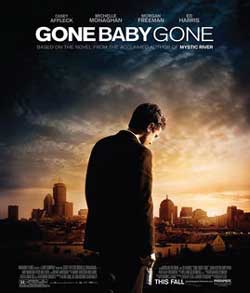
Gone Baby Gone...a morality tale! Admirably directed by Ben Affleck...


Opening narratives normally turn me off, but in the case of the feature film - "Gone Baby Gone" - the device worked quite effectively.

While the dialogue was a bit preachy as the opening scenes unfolded, undoubtedly, it was Casey Affleck's insightful interpretation of the scripted material that touched a chord.

In sum, his voice evoked a ring of truth which resonated.

One critic noted that Ben Affeck's directing debut on "Baby" was a bit rough around the edges. True.

But, just maybe, he was going for that natural Independent film look without all the slick Hollywood touches.

With a delicate hand and a keen eye, Affleck ushers us into the heart of the story without much fuss or bother.

A young woman's daughter has gone missing.

Without a ransom note - and after a police investigation for three days on a cold trail leads to dead ends - an aunt approaches a young gumshoe (played capably by Casey Affleck) to poke around the neighborhood for clues.

Affleck's character was raised in the area and has inside associations with the locals - so when police leads turn cold - the distraught woman turns to the private dick for help.


With his pretty baby face - and naive demeanor - he appears to be an unlikely candidate for the task. But, when it comes to a crunch, he holds his own admirably.

As he swaggers into the underbelly of the hood, he mixes and mingles with a cast of colorful distasteful characters.

Some individuals would throw up their hands in disgust and retort "white trash".

For sure, casting could have been conducted on the Jerry Springer show.

Actually, Affleck pulled people from the streets to play a handful of small parts in the intense drama.

Hitchcock often cast minor roles with relative unknowns. The legendary directory felt that if an actor's face was less familiar to the audience, it may lend more realism to the film.

It works here!

A lot of the language is pretty foul (raw) with no holds barred.

And - as the story progresses - the bizarre twists and plot turns become a little convoluted!

It's a sordid tale about child abuse, dirty cops, and a slice of life that middle America would prefer to cast a blind eye to.

Some judicious editing would have tightened up the project somewhat.

But, this being Ben's first "baby", he goes all out (what the heck).

When it's determined that the child has not really been "kidnapped" at all, but taken to "save her" from her from a squalid existence, the piece becomes a morality tale.

A question arises.

Should the child be returned to the rightful parent - an immature drug-addicted selfish one - or stay with a family that will provide a loving home and the needs of life?

At this juncture, the floodgates opened for me.

I suppose, I have a confession to make.

When I was seven years old, a strange man came up to me on the street outside my elementary school - addressed me by name - and then asked me one question.

"Are you happy?"

For the life of me - to this day - I can't recall my response.

The next day, he reappeared on a mission.

After my clothes were packed into little bags, he bundled me up into a late model car parked out front.

As we drove off, I stared out the window and caught the distressing image of my mother standing on the stoop, wiping the tears from her eyes.

Although the details are still a little vague, I recall being taken into a small courtroom; then - with little more ado - I was made a ward of the State.

In moments, I was whisked away to a quaint little house in the suburbs, where I was placed in the care of a pleasant elderly couple.

A few days earlier - a couple of my mother's friends had been involved in a drunken brawl - which resulted in a serious injury to one man's head.

In what seemed like seconds, in a nightmarish turn of events, police and medics swirled all around the humble little dwelling, as the authorities tried to resolve the issues.

After an urgent plea from distant relatives and neighbours, child welfare was inclined to release me from my Mother's care, and place me in the custody of the State.

There's a line in the film:

"You are who you are because of where you haven't been."

Over the years, I have reflected on the past, and occasionally it haunts me.

Would I be the same person I am today, if I had not been transplanted from my "roots?"

Although I was nurtured and given the necessities of life - schooled, taken care of physically, mentally, and emotionally - sometimes I long for my youth.

There is no substitute for a Mother's love...
 
coompax-digital magazine