3
Showing posts with label IRS. Show all posts

Tuesday, January 26, 2010

PEW...rebuttal on allegations of theft & wrongdoing! Art of the Steal (9.14 films)...


Pew accused of Art theft of century!


Protesters angry with Barnes Museum move!


PEW (a charitable trust) was accused of wrongdoing, the rich and powerful in Philadelphia high society allegedly schemed to carry off the art theft of the century, and friends of a respected collector (Alfred Barnes) rallied in court with cries for mercy (amidst a mountain of scandalous documents which pointed an accusing finger).

The whole tawdry tale was documented recently by 9.14 Films and well-received at a handful of prestigious Film Festivals around the country.

In my review of the "Art of the Steal" - I reported on all the juicy titillating details - which must have driven  my readers into a wild disbelieving frenzy!

Post:  01/20/2010

http://ijulian.blogspot.com/search?q=Art+of+the+Steal

Oh, there was malicious gossip about Moses Annenberg, eye-brow-raising rivalry between son - Walter Annenberg - and the insightful financially-independent art collector (and much to-do about his priceless collection which was at the heart of a great controversy), a lot of back-stabbing, sleuthing, and all-round treacherous behaviour on the part of all the power-players.

Curiously, the alleged perpetrators of the crime, refused to chat on-camera with the filmmakers for some inexplicable reason.

On these occasions, the producers (and "friends of Barnes") offered up publicity stills which - for the most part - were downright unflattering.


While Ray Perelman swirled in intrigue in the shadows, the director of the well-crafted documentary, flashed a photograph on screen which portrayed the man as evil personified.


A PEW representative (a woman) came across as - shrill, haughty, a snob - well, you get the picture!

After a painstaking day or two of drafts, edits, and polishing, I finally posted the Barnes drama on the Tattler web site without much thought.

Another one put to bed!

Curiously, when I was checking e-mail today, I spied a communication from PEW tucked away amidst all the rubble e-mails, sales pitches, spam, and so forth and so on.

In that communication, there was a brief note from a PEW spokesperson, who noted for the record that the Charitable Trust had responded to the allegations on their web site.

Right off-the-bat, PEW asserted that the reason they did not agree to interviews with the film crew for their documentary on the Barnes' issues, was because they anticipated  there would be bias.

Rather than be manipulated, or backed into a corner, I suspect they chose to go their own way.

In response, I contacted the PEW spokesperson and assured the individual that - to be fair - I would post their rebuttal at this site.

I cut their responses and inserted them herein below.

Please note that the questions raised to ferret out the information were posed by PEW and/or their associates (attorneys, whomever) and that my involvement amounted to that of  "messenger" only.

So, don't shoot me, eh?

__________________________________________________________
FAQS

The Pew Charitable Trusts' Role in the Barnes Foundation Move

Organization: The Pew Charitable Trusts

The Pew Charitable Trusts has provided support to the Barnes Foundation as part of our longstanding commitment to protecting and preserving cultural treasures held in the public trust.

Most recently, we have taken great pride in serving as an advocate and fundraiser for the Barnes as it plans to relocate its world-class art collection from suburban Lower Merion, Pennsylvania, to a new location on Philadelphia’s Benjamin Franklin Parkway.

Below are some of the most frequently asked questions about Pew’s role with the Barnes Foundation.

Q: Why is the Barnes Foundation moving?

A: The Barnes Foundation is moving its gallery from Lower Merion to Center City Philadelphia as the only feasible solution to severe and chronic financial problems. If these problems had remained unaddressed, the Foundation would have been unable to pay its bills. The physical security of the individual artworks and the integrity of the collection as a whole would have been at risk.

Q: What is Pew’s role with regard to the Barnes Foundation?

A: Pew’s role has been as an advocate and fundraiser. We, along with other donors, helped to raise $150 million (which includes our own funds) to build a new facility in Philadelphia, relocate the collection and establish an endowment to ensure the Foundation’s future security.

In addition, Pew provided interim operating support, enabling the Foundation to stay open in its Merion location.

We acted not only to sustain the Barnes in the short term, but also to help put it on sound financial footing for generations to come, and as an independent institution accessible to all audiences, as Dr. Barnes wished.

Q: How much has Pew contributed to the Barnes Foundation?

A: Pew has made grants totaling $24,350,000 to support the Barnes Foundation, which includes $20 million to support the costs related to the new facility.

Q: Was Pew motivated to meet a test required for public charity status?

A: Pew’s role with the Barnes was neither motivated by nor necessary for our application to become a public charity. Our work with the Barnes Foundation was one of four examples we included in our Form 1023 petition of Pew’s ability to attract public support.

The examples were chosen from a long list of qualifying projects. Pew qualified as a public charity irrespective of our work for the Barnes.

Q: Does Pew have any control or a governing role with the Barnes? 

Q: Did Pew set out to take over the Barnes?

A: No. The Barnes Foundation is led by an independent board of trustees. The Barnes came to us after determining that its very existence was threatened and that it could not accomplish its mission or survive in its Merion location.

We agreed, and provided much-needed support for its operations and long-term plan.

Pew is not involved in operating the Barnes Foundation and we are not represented on the Barnes board.

Q: Does Pew have any control or ownership of the Barnes  artwork?

A: Absolutely not. Pew does not have any ownership of or control over the Barnes Foundation or its collection of artwork.

Control over the assets and programs of the Barnes remains vested exclusively in its board.

Q: Aren’t Pew & others unfaithful to Barnes' intentions by moving the collection?

A: Rarely reported, the governing document establishing the Barnes Foundation states that if the Foundation were no longer financially stable and needed to move, it would have the option to do so.

The Montgomery County Orphan’s Court granted the Barnes Foundation request to relocate the art collection after years of litigation and weeks of hearings.

The judge carefully reviewed the alternatives and agreed that the move to downtown Philadelphia was the best solution to the severe problems facing the Barnes Foundation.

Q: Why didn’t Pew participate in Art of the Steal (documentary).

A: We learned that the film was going be severely biased. Given our institutional commitment to the facts and quality information, we decided it would be inappropriate to participate.

________________________________________________________


Wednesday, January 20, 2010

The Art of the Steal...Barnes Collection scandal! Power & greed saga in Philadelphia...


Matisse painting at heart of power struggle!


The "Art of the Steal" is an absorbing tale about the intrigues surrounding a billion-dollar art collection, the astute art-lover who painstakingly pieced the celebrated canvasses together over the course of his idyllic life, and a gang of big-city culture thugs out to wrest the spoils of his labor from their resting place in a gem of a museum with the express intent of capitalizing on the masterpieces.

Of course, I am referring to the Barnes collection of post-impressionist paintings, which is second to none anywhere on the planet.

In spite of the fact the documentary (prouduced by 9.14 pictures) is fairly pedestrian in approach (with occasional creative flourishes here and there to break the monotony) it is the subject matter that is downright fascinating.

I should preface this post by noting that I started my professional career as a "painter".

During my teens and twenties (during a particularly creative period) I exhibited a series or two of  abstract-expressionist paintings and fine line drawings in a myriad of art institutions; hence, I have first-hand knowledge of the gallery and museum scene.

In a nutshell, the film is basically a morality tale about greed and power.

In the opening scenes, the producers of this slick documentary, introduce filmgoers to Albert C. Barnes, a brilliant academic with a keen eye for art.

Shortly after Dr. Barnes discovered a treatment for veneral disease a few decades ago (by virtue of a drug named Argypol) he proceeded to embark on his quest to start-up a significant art collection from the spoils of his profit-making medical venture.

As luck would have it, Barnes was fortunate to cross paths with a handful of up-and-coming impressionist painters on overseas jaunts to Europe - Picasso and Matisse - for instance.

At a time when the art world - major museums, in particular - were focusing elsewhere on acquisitions for their permanent installations, Barnes snapped up canvasses that appealed to his artistic sensibilities at a time when the market was wide open.

In fact, Barnes - a Johnny-on-the-spot of sorts - was able to snatch up key pieces (best examples of painter's styles) for literally a song.

Once the diverse pieces began to stack up, the visionary collector  proceeded to build a museum to house the one-of-a-kind masterpieces.

The Barnes Foundation was subsequently founded in 1922.


Unlike a museum or gallery that tended to mount canvasses according to style and period, Barnes elected to focus on their stature instead; subsequently, he arranged them according to aesthetic value.

Over time, the walls were adorned with priceless works, he literally hung himself.

As a result, scholars collectors and academics hailed the museum  setting as a remarkable personal cultural experience.

From the start, Barnes vowed to cause an uproar in the social circles he abhorred.

Of course, that  didn't curry much favor with the Philadelphia elite who were the target of his acid barbs.

For example, he accused Philadelphia insiders of running a house of artistic and intellectual prostitution.

So, early on, Barnes created arch foes who plotted against him, thereafter.

A handful of his most staunch critics responded, for instance, by denouncing his paintings as "nasty" "debased" works of art that were downright "primitive".

For this reason, the discerning collector - with amazing taste - taunted his rivals to just try to get their hands on his priceless collection (which an Investure Trust would protect from beyond the grave in the event of his untimely demise. Or, so he thought).

It must have stung his harshest opponents when Matisse opined:

"The Barnes Museum is the only sane place in America to view art."

The collection boasts Cezanne's renowned "Card Players", a handful of exquisite Serault models, Matisse's remarkable LA DANCE (possibly worth a billion plus dollars in value if not simply priceless), and numerous Picassos, Van Goghs, etc.


In his mind, Barnes envisioned (and thereafter created &  sustained) an institution where students could study, art-lovers teach, and collectors indulge their artistic sensibilities.

The fussy connoisseur expected to raise the bar in respect to - not only the value of art - but its purpose in daily life.

Unfortunately, over time, Barnes incurred the wrath of a handful of the local power elite.

For starters, he began to bump heads with Walter Annenberg and his family, which owned the all-powerful mainstay daily in Philadelphia.

When Moses Annenberg (allegedly a gangster) was brought up on charges of tax evasion, Barnes ridiculed son Walter about his father's shortcomings.

Walter Annenberg never forgave the democrats for pursing his father so relentlessly, either.

Barnes didn't help matters when he posted notices around the museum which labelled his enemies basic whores and exploiters of art out for vulgar personal, professional, and monetary gains.

He slurred the locals when he referred to Philadelphia as an intellectual slum (which didn't help matters much after that).

Early on, two or three days during the course of the week were slated for art classes, while the  remaining few were allotted for public visits by art-lovers, collectors, and scholars (by appointment.only)

After Barnes died suddenly in a fatal auto crash and the museum directorship was handed over to one of his dedicated disciples - Violette De Mazia (a good friend & confidante) - Annenberg and the Philadelphia Inquirer began to criticize the museum (going so far as to allege that the Barnes facility was not meeting its mandate pursuant to its tax exempt status).

Angered at what they viewed as a snobby attitude about art and the institution that housed it, critics conspired to break down the halls, and go for control of the celebrated collection.

Shortly after a newspaper article reported that the Barnes Museum was violating its tax status, the museum relented and began to schedule regular viewings for tourists, art lovers, and the like (who pined to get inside the doors and gaze upon the priceless works of art).

At this juncture, what was once a peaceful setting in the suburbs, erupted into a a storm of controversy when busloads of art-lovers and lookie-loo's roared into the neighborhood and upset the once-tranquil historic streets.

Enemies rubbed their hands with glee; after all, they were plotting to shut-down the museum.

Ah, just the ammunition they needed!

In addition to the neighborhood problems surfacing daily, opponents argued that unless authorities stepped in and took charge, the rare collection would be at risk of damage since the old museum was allegedly in a bad state of disrepair.

Their vision?

A permanent installation at the Philadelphia Art Gallery downtown.

Although some thought the "Barnes Investure" was iron clad, there was a loophole which the enemies of Barnes blasted wide open.


Violette de Mazia faithfully remained at the helm for about thirty years and carried out Barnes' wishes to a "t".

Indeed, the Museum flourished and gained respect in its capacity as a school and major art collection of undisputed value around the globe under her tutelage.

But, upon her death, the control of the Museum was unfortunately transferred to Lincoln University according to the last wishes of Barnes.

At this juncture, the roof literally tumbled down, when an ambitious lawyer was installed as head of the non-profit foundation.

At his bidding, Annenberg was invited into the fold, and the two began plotting.

Although the will specifically stated that the collection must never be lent out - or be exploited solely to reap financial benefit - the clever lawyer found a technicality to further his cause.

On the grounds that the Museum needed funding for renovations and operating costs, he convinced a court to permit the Barnes Collection to go on tour (which ended up being a landmark Art event of the century which rustled up staggerings profits right out of the starters gate).

Now, the big surge was on to shut down the Barnes Museum and install the collection permanently at the Philaelphia Art Gallery.

Now, things got diabolical, to say the least.

The potboiler shifts into high gear as the documentary focuses on the court proceedings, power-plays made by city officials and the Directors at PEW (one of three foundations now in charge of the Barnes Collection), and the long drawn-out public outcry from Barnes supporters and respected Art establishments around the country.

The documentary catches all the maneuverings - and treacherous transparent plot twists, too - in intense on-the-edge-of-your-seat detail.

Curiously - with exception to  the Mayor - the "bad guys" singled out as the perpetrators of the" largest theft of art in this century" - would not utter a word in their own defense on camera (or even on record for that matter).

Not surprising; after all, the allegations were shocking.

All the documented evidence was pretty incriminating, too

In court, PEW's legal eagles alleged that the sole reason for wanting to transfer the art pieces was due to the fact there were insufficient funds to continue to safely and professionally display the art at the Barnes Museum.

Also, they boldly asserted that the museum could not operate properly because of limitations imposed by the city in respect to viewing hours.

There was also a question raised about insufficient parking.

The Barnes supporters countered that arrangements had been made to extend the hours of daily operation, build a much-needed parking structure, and secure sufficient funds to operate more comfortably.

But, the smoking gun was staggering!

One of the witnesses testified that he uncovered a fund written into the state budget that would provide $100 million dollars for the Barnes to be funded and housed at the Philadelphia Art Museum.

Curiously, the Judge was not informed of this little detail when PEW (and others) originally filed their motion with the court to shut down the Barnes Museum for altruistic reasons.

If there was $100 million in the kitty, obviously there were enough funds available for the Barnes to carry on.

More intriguing perhaps was the disclosure that an investigation was unable to determine - who applied for the $100 million, who approved it, and how it ended up being written into the state budget - with no one's apparent knowledge.

Yes, I suppose God does work in mysterious ways, eh?

But, the plot thickened.

The Barnes ) supporters accused PEW (currently in charge of the Barnes Collection by court order) of making a grab for the Barnes Collection in a deceitful effort to change their private foundation status to a non-profit.

Although PEW denied the charge vehemently, IRS documents confirmed that the Barnes Collection was - in fact - cited as grounds for a change of tax status in their legal paperwork filed with IRS officials.

Although the Barnes supporters were hopeful that the Judge would swing his ruling their way - especially after PEW'S dastardly deeds were reported to the court (with supporting documentary evidence) - the end results were disheartening.

In sum, the Judge ruled that "the friends" of Barnes had no legal standing; consequently, his honor denied their motion (request) to overturn the earlier decision which allowed the collection to be moved lock, stock, and barrel to a new gallery space at the Philadelphia Art Museum.

"They're going to turn it into the McBarnes Collection," some lamented, after the ruling was handed down.

Yup, they intend to serve up the art experience, like fast-food.

To many, the whole cultural experience - until now a unique one at the Barnes Museum - will be lost.

Worse than that, the art  thieves have not only violated Barnes last wishes, but spirited away the collection to bolster their own selfish greedy ends.

In the final analysis, it appears that the high and mighty operate above the law without  fear of recrimination.

In sum, power corrupts!


Portrait of Barnes mulling over his priceless collection!


________________________________________________________
Footnote

Please note that on the heels of this post being published @ the Tattler - a PEW representative contacted me by e-mail - and noted that the Charitable Trust has posted a rebuttal to the allegations at their web site.

To be fair, I penned an update on the issues, at the Tattler site.

Link:


Saturday, April 26, 2008

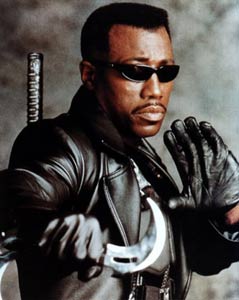
Wesley Snipes...IRS tax evasion lands Actor in slammer!

Wesley Snipes unable to win battle with Uncle Sam...


Well, fans of actor Wesley Snipes were a little stunned this week when charges of income tax evasion brought by the IRS - not only "stuck" - but appear to be bundling the action star off to the big house for three years!

Uncle Sam doesn't fool around when it comes to hanky-panky with tax dollar revenues!

No surprise, though.


Decades ago, everyone thought Al Capone was pretty much "untouchable" - a flim flam man - a teflon Don. In the final crunch, it was the undeclared ill-gotten gains - not the racketeering or the rum-running or illicit prostitution or slave trade - that done him in.


Even Leona Helmsley's mega millions couldn't save her from the slammer - and subsequently - daily stints in the head scrubbing out latrines and carting out the trash for allegedly writing off expenses which were disallowed.


Most are shocked by the severity of the Snipes sentence.

Mr. Swipes had no previous record (and no trouble with the Law previously) so - by most accounts - the star of a couple of blockbuster Hollywood films should have been given probation. After all, the felony charges were dropped, and lowly misdemeanours don't generally warrant such a severe slap on the wrist.

Was the bench-warmer who laid down the sentence a hangin' Judge?

Or, was Mr. Swipes another victim of a judicial system bent on sending a message to the American people: Don't cheat on your taxes?

On the other side of the coin, the prosecution and the government argued that Mr. Swipes was not just an "innocent" who inadvertently failed to report his earnings correctly or pay appropriate tax based on his earnings.

The lawyers who prosecuted the case stridently put forth the proposition that Swipes willingly got involved with a tax-deferral scheme which he knew was not legal or acceptable in the eyes of the IRS or the U.S. Tax Court.

In fact - Attorney General Nathan J. Hochman of the Justice Department - was quite emphatic in his statements to the press that Swipes was:

"A disciple of a tax defiance movement who understood his actions were illegal."

To add credibility to the Justice Department's argument, Hochman noted that the incidents of tax evasion did not occur in just one calendar year, but over several. And, that the failure to report earnings was not an "accident' - in the final analysis - in view of the documented evidence.

Swipes was not a victim of "jackals" who took advantage of his lack of knowledge about the intricacies of tax laws, he stressed to the swarming media who hovered in a fever frenzy outside the court environs this past week.

Although Swipes stated in a prepared release prior to sentencing that he was - idealistic, naive, passionate, truth-seeking, and a spiritually motivated artist unschooled in the science of law and finance - the comments fell on deaf ears.

In response to the criticism that the sentence was too harsh, Judge Hodges (who presided over the case) disagreed and noted for the record:

"He exhibited a history of contempt over a period of time for U.S. Tax laws."

"In my mind these are serious crimes," he concluded, as he passed the sentence.

After hearing the verdict, Swipes had no reaction.

Maybe, he saw it coming?

The crux of the case was a charge by the IRS that Snipes tried to defraud the IRS by by virtue of his deceitful efforts to collect 11.4 million in fraudulent income tax refunds. In addition, it was alleged (and proven) that he failed to file returns from 1999 through 2004, despite the fact he generated millions of dollars through career pursuits and investments during that time frame.

When Uncle Sam wants you - he gets 'ya - eh?

 
coompax-digital magazine