3
Showing posts with label Michael Moore. Show all posts

Thursday, May 19, 2011

California Hospital...negligent Nurses & Doctors endanger patients! Malpractice runs rampant!


Where is Michael Moore when you need him?

Before a patient dies at the hands of negligent nurses and doctors, a Government agency needs to investigate the slip-ups at California Hospital on Grand Avenue in downtown Los Angeles, and take immediate action - including disciplinary measures - to ensure the incompetence does not rise to charges of manslaughter.

Last night, for instance, patients languished in the halls for hours-on-end suffering severe pain and undue hardship before being attended to.

Those who were promised admittance were also forced to perch in crowded uncomfortable quarters – in some cases in filthy back rooms, tiny closets, and bizarre crawl spaces – before they were eventually transferred to a hospital room upstairs twelve or thirteen hours later.

In contrast, Hospital staff are quick to search down patients sprawled on the floor in pain here-and-there-and-everywhere about the hospital environs, to ensure they secure a copy of the patent's insurance carrier so that payments may be collected.

A definite lack of communication and shoddy professionalism added to the chaos.

For example, one nurse failed to give one patient crucial pain killer for a severe physical ailment, on the grounds that she was waiting for a doctor’s orders.

However, if the patient hadn't spoken up, the treatment would not have been forthcoming.

For good reason.

No one informed the doctor the patient was in pain, so the request for a prescription was never filled, for obvious reasons.

Food - when it arrived bedside - was usually cold, tasteless, and served up late in Styrofoams "take-out" wrappers!

The servers usually dragged their feet, tossed down the trays with little concern about the quality, and - more-often-than-not - gave the impression they would prefer to be sailing or some other such thing.

In the event there is ever an outbreak of food poisoning - or sudden unexplained infections among the patients - it would come as no surprise given the lackadaisical attitude of the Nurses in charge.

Meanwhile, on the 9th floor, patients were shocked to witness student nurses botch their attempts to place an IV in one patient’s arms – not once, but at least three times (totally obvious to the pain and discomfort they were inflicting on the patient).

And, when the instructor took her turn to show them how the task was professionally accomplished, she made a mess of it, too.

The patent's arms - not only ended up bruised - but also scarred once gaping open wounds finally healed.

Patients come to the hospital to be healed, not injured, God Willing.

Should a hospital allow a student nurse to practice on a patient with low platelets with a bleeding disorder?

If they think so, they need their heads examined.

And, their license to practice medicine at the California Hospital revoked, for sure!

An overhaul of the Health system is desperately needed, so I trust that the next goal of President Barack Obama will be to achieve that end in his next term as President (?).

Amen!

http://www.thetattler.biz


Friday, May 13, 2011

St. Mary's Medical Center...Hospital mixes up blood samples! Dr. Steven Ho & Dr.Jeffry Dayton malpractice!


  • Patients at St. Mary's Medical Center in Long Beach were quite shocked and taken aback when a nurse in the Emergency Care Unit  reported that their blood samples tested positive for marijuana.

    How could that be?

    One startled patient informed personnel right away that there was a gross error!

    "I haven't smoked any marijuana in over twenty years!"

    When a patient in the next bed was overheard confiding to a Nurse that he smoked one or two joints a day, it was obvious to the individual who allegedly tested positive, what occurred behind-the-scenes.

    The technician who drew the blood - and tagged the samples after-the-fact for processing - must have switched the blood samples by mistake!

    Instead of investigating the issue to rectify the error, the Nurse in charge of the patient refused to open up an investigation, or even strike the erroneous blood test from the patient;s medical file.

    In fact, when the patient asked for the name of the President of St. Mary's Medical Center so they could file a complaint, the staff in the emergency department claimed they did not know the individual's name.

    And, get this, they denied having any knowledge of any contact information for the head of the Hospital they were in the employ of!

    It not only stretches one's credulity, but smacks of an outright cover-up, undertaken in a deceitful and dishonest effort to mitigate damages arising from the negligent acts of the employees at St. Mary's in Long Beach which rose to the level of malpractice.

    Unfortunately, there are other glaring problems at the hospital which warrant a review.

    Patients have complained that on occasion they were placed on NPO (food restrictions which lasted two days or longer in some instances) pending medical procedures to be performed at the facility.

    Once the NPO status was lifted, however, nurses neglected to update the computers; consequently, patients were left hungry until the glitch in the hospital's procedures was resolved.

    In one instant case, a Nurse served a dinner after the patient brought the problem to the employee's attention. However, instead of delivering a hot meal with nutriional value after the forced two-day fast, the incompetent technician threw together a cold sandwich with a small container of cold juice.

    In addition, patients have been forced to endure hardships because quite a few of the Nurses don't speak fluent English.

    Patients complain that there is a communication problem at this hospital which has continued to be unresolved.

    Notwithstanding the foregoing, it should be noted for the record, that St. Mary's has hired a few quack doctors bent on running up huge charges for services rendered, who have demonstrated their lack of concern for the safety and well-being of their patients.

    Reports have filtered out that once doctors at St. Mary's have billed insurance carriers to the max, they have proceeded to discharge patients in spite of the fact the individuals are still suffering pain and hospital doctors have neglected to properly diagnose and treat their patients.

    Dr. Steven Ho is a particularly bad offender in this regard.

    His negligence rises to the level of malpractice which warrants disciplinary action in fact.

    For good reason, I have issued this consumer alert, to warn residents in the neighboring communities to avoid St. Mary's Medical Center like the plague.

    News at 11!

    http://www.thetattler.biz


    Friday, May 21, 2010

    Crude...Judge issues subpoena for director's footage! Michael Moore objects...


    Over the past year or so, CRUDE, has been making the rounds at Film Festivals around the country - and garnering a handful of prestigious awards and widespread critical acclaim - among filmmakers and film fans alike.

    Three years in the making, this cinéma-vérité feature from acclaimed filmmaker Joe Berlinger (Brother’s Keeper, Paradise Lost, Metallica) weaves  the intriguing true story of one of the largest and most controversial environmental lawsuits on the planet.

    "Crude is a real-life high stakes legal drama, set against a backdrop of the environmental movement, global politics, celebrity activism, human rights advocacy, the media, multinational corporate power, and rapidly-disappearing indigenous culture," according the film's producers.

    The film explores a myriad of complex issues from all angles in a bold-faced effort to reveal the truth about environmental peril and human suffering  as seen through the eyes of Berlinger's searing penetrating lens.

    Now there is a new twist to the complicated drama!

    Recently - Chevron demanded 600 hours of outtake footage from the "Crude" production offices (by way of a subpoena submitted to the court) - arguing in its defense that said evidence may be able to establish that the filmmakers intentions have not always been so lily-white and pure (or  altruistic in nature).

    In a nutshell, Chevron is seeking  to establish corruption and misconduct on the part of the plaintiffs.

    In a knee-jerk response, the Plaintiffs submitted a vigorous defense to the Judge presiding over the case.

    For example, in their legal brief, the filmmaker argued that his work was protected by journalist privilege which protects reporters and others in the news-gathering business from being compelled to reveal confidential sources or divulge confidential material.

    Judge Lewis A. Kaplan of Federal District Court in New York found little merit with the arguments and proceeded to grant  the request for the subpoena.

    The filmmakers did qualify for the privilege, Judge Kaplan wrote, but the conditions for overcoming that privilege had been met.

    The judge’s decision sparked outrage among documentary filmmakers, who said it endangered their form of journalism.

    Michael Moore said the decision could have “a chilling effect.”

    “If something like this is upheld, the next whistle-blower at the next corporation is going to think twice about showing me some documents if that information has to be turned over to the corporation that they’re working for,” Mr. Moore said.

    “Obviously the ramifications of this go far beyond documentary films, if corporations are allowed to pry into a reporter’s notebook or into a television station’s newsroom.”

    Chevron lawyer, Randy M. Mastro, said that those criticizing the subpoena were on the wrong side of established law concerning what kinds of materials can be obtained -  and that whatever “Crude” is  it should not be considered journalism.

    “This isn’t about the First Amendment,” Mr. Mastro said.

    “This is about a plaintiffs’ lawyer who decided he wanted to star in a movie and gave a sympathetic filmmaker extraordinary access to the plaintiffs’ case and strategy," he accused.

    The outtakes provide - “a compelling video record of exactly the activities that these plaintiffs’ lawyers have engaged in to corrupt and taint the political process in Ecuador” - he summed up.

    Ilann Maazel, a lawyer for the plaintiffs, called the efforts by Chevron to get the outtakes “another last-minute attempt to delay the proceeding and avoid justice.”

    He accused the defendants of  - “twisting  the truth” and mischaracterizing the scenes from the film -  to make the plaintiffs’ actions appear to be corrupt.

    “The corruption is not in some 600 hours of videotape."


    “It’s in the ground and water of the rainforest for anyone to see and smell.”

    In his decision, Judge Kaplan acknowledged that the Court of Appeals for the Second Circuit recognizes the existence of a “qualified privilege for journalistic information” and declared that “Crude” merits that protection.

    But that is only the beginning of the process, since the privilege does not grant absolute protection of materials.

    “It doesn’t necessarily mean you’re exempt from the subpoena,” said David Hudson of the First Amendment Center in Nashville.

    “It just means that there are hoops the party seeking the material has to jump through.”

    Judge Kaplan referred to those hoops in citing a 1999 case (Gonzales v. NBC) which upheld a District Court subpoena for outtakes from a “Dateline NBC” program that reported on what it called racially-based traffic stops by Louisiana law enforcement officers.

    Materials can be released - the Court of Appeals for the Second Circuit held -  "if they are confidential, are likely to be relevant to a significant issue in the case and are not reasonably obtainable elsewhere."

    The conditions were met in this case, Judge Kaplan concluded; the outtakes, he wrote, “will contribute to the goal of seeing not only that justice is done, but that it appears to be done.”

    Experts in media law said Judge Kaplan’s opinion did not fall outside of the mainstream of First Amendment jurisprudence.

    Dave Heller, senior staff attorney at the Media Law Resource Center in Manhattan, said that if someone seeking a subpoena says the material is relevant to significant issues, “it’s appropriate for the judge to take that seriously.”

    However, Mr. Heller added that he was not sure this request should have been granted.

    “The common-sense reaction is, ‘This is just a documentary — it speaks for itself,’ ” he said.

    “It suggests that Chevron and the other defendants in Ecuador would have more than enough leads to follow up and question people to obtain relevant information to their litigation there, without imposing on the documentary filmmaker to compromise his relationship with his sources and disgorge his own unpublished material.”

    The film’s director, Joe Berlinger, said Judge Kaplan’s order came as a shock.

    “To have this broad request to turn over everything related to the case, to me, is just a trampling of the First Amendment and the journalist’s privilege,” he said.

    Even though the people on camera had agreed to participate in the film and had signed waivers, Mr. Berlinger argued, they still had a measure of confidentiality that should have counted for more in Judge Kaplan’s consideration of the case.

    “People who agree to be in a film don’t agree to have their lives exposed as if they agreed to be on a 24/7 Web cam, which is in essence what’s happening,” he said.

    He said he hoped the order could be overturned.

    “At the end of the day, if I lose all my options, yeah I’m going to comply with the subpoena and turn it over. I’m the father of two children, and this is certainly not worth going to prison over.”

    In response, the filmmakers have organized a petition - which has been signed by a who's who's of the Hollywood elite (Oscar-winners are on the list) - and have submitted an "open letter" urging a reconsideration.

    Since I personally have some knowledge of the court system ( I studied law) - I am keenly aware that while the petitioners have a right to urge a reconsideration - it must be submitted in the proper format in the correct forum with legal jurisdiction over the issues.

    To clarifty this, I asked the Public Relations firm handling the dialogue between the filmmakers and the press, to kindly advise as to what they hoped to accomplish wth an open letter - which in my estimation - carries no legitimate weight in the eyes of the judiciary in its current incarnation.

    As of this date, there has not been any response back.

    Subsequently, I am publishing their "open letter" herein below verbatim to at least get their protest arguments out to the general public so that a dialogue may commence in the community at large.

    _________________________________________________

    May 13, 2010

    An Open Letter in Support of Joe Berlinger
    (Documentary Filmmaking Team of "Crude")

    As members of the documentary film community, we the undersigned strongly object to the Honorable Judge Lewis A. Kaplan's ruling last week in the case involving our colleague Joe Berlinger, the Chevron Corporation, and Berlinger's 600 hours of raw footage shot during production of his documentary film "Crude".

    Judge Kaplan sided with Chevron and ruled that Berlinger must turn over all of his raw footage to Chevron for their use in the lawsuit discussed in the film. Berlinger and his legal team plan to appeal the ruling.
    In cases such as these involving access to a journalist's work material, whether they involve a newspaper or online reporter, a radio interviewer, a television news producer, or a documentary filmmaker, it is understood that First Amendment protection of the journalist's privilege is never absolute.

    Typically, if such privilege is successfully rebutted in court, a turn-over order demanding a document or other thing is issued and the journalist must comply or face the consequences. Therefore, it is astounding to us that Judge Kaplan demanded that all of the footage shot during the production of the film be handed over to the attorneys of Chevron, given that the privilege exists primarily to protect against the wholesale exposure of press files to litigant scrutiny.

    While we commend Judge Kaplan for stating "that the qualified journalists' privilege applies to Berlinger's raw footage", we are nonetheless dismayed both by Chevron's attempts to go on a "fishing expedition" into the edit rooms and production offices of a fellow documentary filmmaker without any particular cause or agenda, and the judge's allowance of said intentions.

    What's next, phone records and e-mails?

    At the heart of journalism lies the trust between the interviewer and his or her subject.

    Individuals who agree to be interviewed by the news media are often putting themselves at great risk, especially in the case of television news and documentary film where the subject's identity and voice are presented in the final report. If witnesses sense that their entire interviews will be scrutinized by attorneys and examined in courtrooms they will undoubtedly speak less freely.

    This ruling surely will have a crippling effect on the work of investigative journalists everywhere, should it stand.

    Though many of us work independently of large news organizations, we nevertheless hold ourselves to the highest of journalistic standards in the writing, producing, and editing of our films. In fact, as traditional news media finds itself taking fewer chances due to advertiser fears and corporate ownership, the urgency of bold, groundbreaking journalism through the documentary medium is perhaps greater than ever.

    This case offers a clear and compelling argument for more vigorous federal shield laws to protect journalists and their work, better federal laws to protect confidential sources, and stronger standards to prevent entities from piercing the journalists' privilege.

    We urge the higher courts tooverturn this ruling to help ensure the safety and protection of journalists and  their subjects, and to promote a free and vital press in our nation and around the world.

    Patrick Creadon
    Los Angeles, CA


    Doug Blush
    Los Angeles, CA


    Eddie Schmidt
    President

    International Documentary Association
    (IDA)

    http://www.thetattler.biz

    Tuesday, March 17, 2009

    UCLA..."Emergency" staff sloppy & unprofessional! Doctors incompetent...


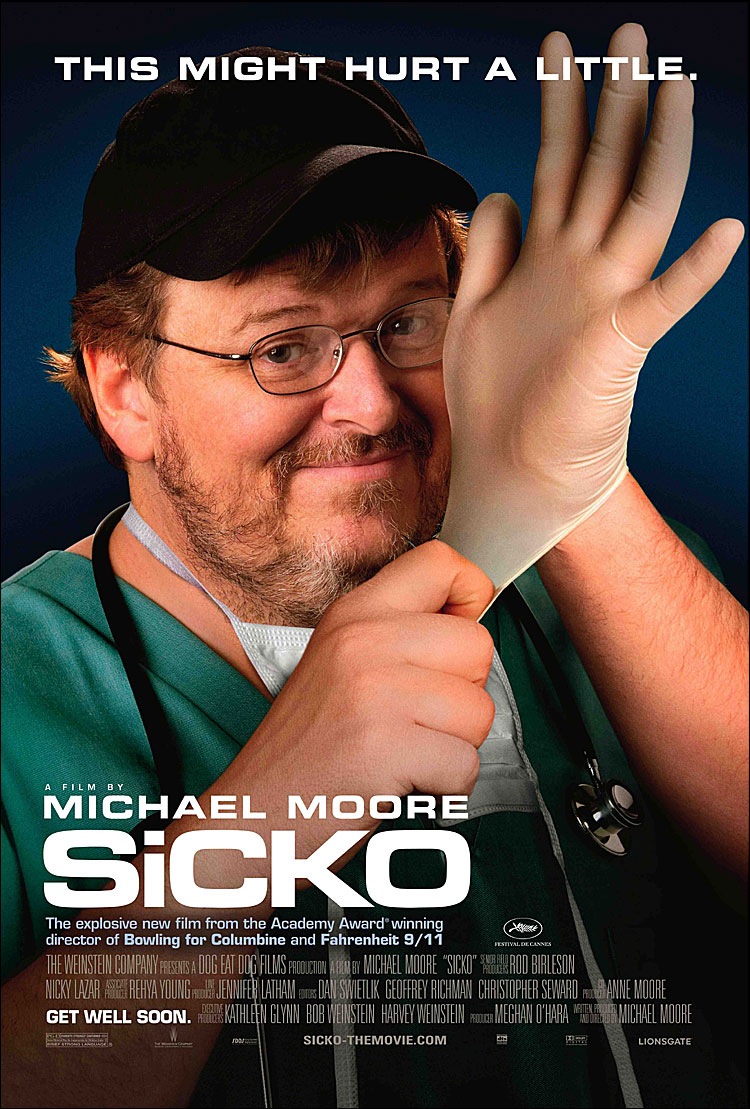
    Although I didn't end up catching Michael Moore's documentary "SiCKO" - a searing expose on the slip-shod way Hospitals are run - what I witnessed today at the UCLA "ER" room signalled to me something is definitely amiss in the Health care industry.

    I accompanied a friend who was complaining of a specific ailment to the Ronald Reagan Medical Building so appropriate tests could be taken to determine the seriousness of his worsening medical condition.

    Without much of a wait (kudos for that small mercy, at least) he was ushered into a small "fast-track" cubby-hole-sized room quickly enough, but what transpired after the initial admission to the "ER" shocks the sensibilities a tad!

    After informing the attending physician Eric Snyder (who relayed the info on to PHCP Ashwin Ramakrishnan MD) of his desire to have a blood test performed to verify if he had contracted a disease which might account for why he was feeling down-on-the-weather, the doc - obviously wet behind the ears - proceeded to have a nurse draw numerous tubes of blood (in what was referred to as a "rainbow" range) for testing at the facility.

    Get this!

    While my friend was waiting for the results from the lab, an unidentified woman in plain clothes stepped into his room unannounced, and asked if she could use an empty armchair that was part of the furnishings in his room.

    Can you imagine?

    The lady, who was not an employee of the Hospital - who, it turns out, was there to hold the hand of friend - was able to waltz in his room on a whim!

    Obviously, the hospital staff were not monitoring the wing, or she would not have been able to barge in on my sick friend and intrude on his privacy without notice or permission.

    But, the problems did not end there.

    After about four hours - during which time my friend basically twiddled his thumbs - a male nurse strode in with a few tablets the doctor alleged would resolve the problem - based on the ailments complained of.

    Notwithstanding, he was flabbergasted to learn that the test he specifically requested (which was the sole purpose for the trip to the out-patient facility) wasn't even conducted.

    And, I have my suspicions as to why the doctor deceitfully avoided the test.

    Had the test results come back positive, it would have been detrimental to the hospitals' best interests.

    In my mind's eye, the suspect conduct of the doctor was underscored when a copy of the tests results he requested (and was told would be forthcoming) were not included later at the time of discharge.

    In fact, my friend had to ask a second time for the results to be printed up and handed off to him for his records.

    Either the doctor was just an incompetent boob and forgot to follow through on the request - or, in the alternative - deliberately sought to withhold the incriminating evidence.

    At this juncture, my friend was quite irate.

    If he knew the doctor was not going to submit a blood sample for the test in question, he would have gone elsewhere, instead of wasting his time at UCLA emergency for over 5 hours and pumping undeserved $$$ into their coffers!

    But, the capper - to me, anyway - was when the nurse waltzed into the room and began discussing intimate confidential details about my friend's medical condition in a loud voice that carried well.

    When my friend stepped out of the room at the time of discharge and discovered that the Hospital staff had seated patients (and their friends) in a small hall just outside of his open door, he was livid.

    "Obviously, the strangers in the hall were within earshot of our conversation, and undoubtedly, heard all the confidential aspects of my medical condition," he wailed to me later.

    You betcha!

    In the future, I trust my friend will seek out a facility elsewhere where the medical practitioners are more sensitive to patients and the inalienable right to privacy.

    I say, avoid UCLA emergency like a plague.


    http://www.julianayrs.com

    Wednesday, October 29, 2008

    AFI FEST...Documentary Competition! A curious mix bag of offerings...


    When film director Michael Moore unveiled his new documentary SiCKO - amid a lot of fanfare in earlier this year in Sacramento - some said:

    "There he goes again".

    Taking in a documentary is one of my favorite past-times.

    Of course, the "doc" comes in all varieties.

    A director may focus on thought-provoking pieces about nature's astounding wonders, or take an insightful foray into an important social or political issue of the day, you name it.

    In my mind's eye, when it comes to the latter, the facts should be presented fairly so that the viewer may weigh all the information - and henceforth - arrive at an intelligent reasoned decision about the issues.

    For the most part, documentary filmmakers are inspired to "log" a topic because they are all fired up about a project. I mean, somethin' must have got 'em all hopped up to tackle the issues, eh?

    For this reason I am inclined to believe that the creators may have a tendency to lean a little.

    Undoubtedly, a subtle manipulation of the content is capable of swaying an audience in a particular way.

    For instance, whether an insightful (or inflammatory) interview or news clip is placed at the beginning or end of the reel may have a dramatic impact on the viewer.

    Although 60 minutes promises to follow the strict dictates of professional journalism - on occasion you can tell by the way the piece was constructed - where their loyalty falls.

    One critic spouted recently that documentaries reminded him of "homework".

    Joe Queenan - at the LA TIMES - recalled the empty experience of being locked in a steamy smelly auditorium forced to watch grainy films about boring topics produced by the Department of Agriculture.

    "I'd rather watch the worst Keanu Reeves movie, I would rather sit through eleven consecutive Demi Moore films (are there that many?) than sit through a documentary," he noted with distaste.

    Or maybe he was responding tongue-in-cheek?

    No matter.

    His statements caused a firestorm from the documentary camp from those who assert that this forum is where political causes, life's injustices and social ills may be brought to the fore.

    June Macquire of Mission Viejo quoted Thomas Jefferson:

    "If a Nation expects to be ignorant and free, in a state of civilization, it expects what never was and never will be".

    The AFI FEST is sponsoring a Documentary Competition this year which focuses on a diverse range of topics.

    Although I can't vouch for any of the docs - since I have't advance-screened any of the mixed bag that is offered up - I have given a run-down below so that discerning film buffs can fathom whether they want to risk pay-out on an uncertain gamble in these troubled economic times.

    AGILE, MOBILE, HOSTILE:
    A YEAR WITH ANDRE WILLIAMS

    [AGILE]
    (USA, 2008, 88 mins)

    A doc which follows Andre Williams (who wrote and recorded numerous hits with the great Berry Gordy, Ike Turner, and Stevie Wonder) as he embarks upon a comeback after enduring poverty and homelessness and a life of reckless living.

    ALONE IN FOUR WALLS

    [ALONE]
    (Germany, 2008, 85 mins)
    According to the press packet, a meticulously eye-opening and beautifully-shot documentary which focuses the lens on young teens incarcerated in a tough reform school located in Russian Urals.
    "Though these kids have stolen, and even killed, they also share dreams and passions as young people do everywhere."

    GOGOL BORDELLO NON-STOP

    [GOGOL]
    (USA, 2008, 87 mins)

    Hailing from five countries, and led by the irrepressible Eugene Hütz, the members of a band tell their stories and share their music.

    Critics are saying this doc elevates the concert film into a full-blown exploration of music, identity and global politics.

    HI MY NAME IS RYAN

    [HIMYN]
    (USA, 2008, 78 mins)

    Ryan is a milk-and-cookies connoisseur, photo booth artist, fake mustache aficionado, and punk rock performance artist.

    According to festival organizers, this poignant doc puts the spotlight on Ryan, who thrives on the therapeutic power of entertaining others as he embarks upon a preposterous number of music and art projects.

    IMAGINADORES

    [IMAGI]
    (Argentina, 2008, 83 mins)

    This doc explores the fascinating world of Argentinian comic books - and along the way - reveals the history, highlights, and undercurrents of this major cultural staple as it surges forward into the 21st Century without boundaries.

    In addition to featuring existing published cartoons, the film animates some of the country's classic comic characters popular today.

    THE LAST DAYS OF SHISHMAREF

    [LASTD]
    (Netherlands, 2008, 90 mins)

    For residents of a small Inupiaq village, global warming is no abstract concept; after all, their island is disappearing beneath rising waters.

    This documentary follows three families wrestling with an enormous dilemma.

    Where should the people, whose livs are interwoven with their land, pick up and move their village to?

    OF ALL THINGS

    [OFALL]
    (USA, 2008, 83 mins)

    In the 1970s, songwriter Dennis Lambert had four songs in the top 100 at once, a feat previously accomplished only by the Beatles.

    Now retired, and selling real estate, Lambert's discovery of an unlikely cult following—in the Philippines!!—lures him back on tour.

    This hilarious doc captures every note.

    PINDORAMA
    THE TRUE STORY OF THE SEVEN DWARVES

    [PINDO]
    (Brazil, 2008, 84 mins)

    A wandering family of performers - all dwarves, all children of a legendary Brazilian clown - travels the countryside celebrating magic, humanity, happiness and courage.

    In this award-winning documentary, a team of filmmakers follows this remarkable, enchanting circus as it charms audiences.

    PLAYING COLUMBINE

    [PLAYI]
    (USA, 2008, 94 mins)

    A videogame that allows players to reenact the Columbine massacre is slammed in the press ,opening a wave of anti-gaming repercussions.

    This provocative documentary follows the controversy, asking questions about gaming culture, free speech and the media's role in fanning the flames.

    SHAKESPEARE AND VICTOR HUGO'S INTIMACIES

    [INTIM]
    (Mexico, 2008, 83 mins)

    A filmmaker uncovers the true tale of her grandmother Rose Elena's friendship with Jorge, the strange transsexual (and perhaps schizophrenic man) who rented a room from her.

    Could Jorge, Rose Elena's close companion, have been responsible for a string of unsolved murders in Mexico City?

    UNTIL THE LIGHT TAKES US

    [UNTIL]
    (United States, 2008, 93 mins)

    Blurring the line between performance, art, activism and terror, a group of "black metal" musicians recorded albums, burned churches and even killed each other.

    This film examines the movement's birth and explosive growth, asking:

    “Is violence a viable artistic response to our destructive consumption-mad culture?”

    WITCH HUNT

    [WITCH]
    (USA, 2008, 91 mins)

    Who wouldn't want a legal system that was tough on crime?

    Unfortunately, as this startling documentary reminds us, the rush to punish the guilty often has devastating effects on the innocent, including the several fathers and mothers sent to prison by Bakersfield's overzealous DA.

    Tuesday, December 4, 2007

    Documentaries...propaganda or educational tool?


    When film director Michael Moore unveiled his new documentary SiCKO - amid a lot of fanfare in earlier this year in Sacramento - some said:
    "There he goes again".

    Taking in a documentary is one of my favorite past-times.

    Of course, the "doc" comes in all varieties. A director may focus on thought-provoking pieces about nature's astounding wonders, or take an insightful foray into an important social or political issue of the day, you name it.

    In my mind's eye, when it comes to the latter, the facts should be presented fairly so that the viewer may weigh all the information - and henceforth - arrive at an intelligent reasoned decision about the issues.

    For the most part, documentary filmmakers are inspired to "log" a topic because they are all fired up about a project. I mean, somethin' must have got 'em all hopped up to tackle the issues, eh?

    For this reason I am inclined to believe that the creators may have a tendency to lean a little.

    Undoubtedly, a subtle manipulation of the content is capable of swaying an audience in a particular way.

    For instance, whether an insightful (or inflammatory) interview or news clip is placed at the beginning or end of the reel may have a dramatic impact on the viewer.

    Although 60 minutes promises to follow the strict dictates of professional journalism - on occasion you can tell by the way the piece was constructed - where their loyalty falls.

    One critic spouted recently that documentaries reminded him of "homework".

    Joe Queenan - at the LA TIMES - recalled the empty experience of being locked in a steamy smelly auditorium forced to watch grainy films about boring topics produced by the Department of Agriculture.

    "I'd rather watch the worst Keanu Reeves movie, I would rather sit through eleven consecutive Demi Moore films (are there that many?) than sit through a documentary," he noted with distaste.

    Or maybe he was responding tongue-in-cheek?

    No matter.

    His statements caused a firestorm from the documentary camp from those who assert that this forum is where political causes, life's injustices and social ills may be brought to the fore.

    June Macquire of Mission Viejo quoted Thomas Jefferson:

    "If a Nation expects to be ignorant and free, in a state of civilization, it expects what never was and never will be".

    Recently, I caught a couple of compelling informative documentaries.

    The "Orange Chronicles", for instance.

    THE ORANGE CHRONICLES is an examination of Ukraine's Orange Revolution from the perspective of an intrepid Ukrainian-American filmmaker who criss-crossed the country in the weeks before the remarkable events of 2004 as a volunteer Election Observer. The director chronicled what turned out to be a most astonishing bloodless political turnaround.


    Another searing insightful documentary on "Darfur" was hosted by award-winning actress - Alfre Woodward - recently at the Fine Arts Theater.


    Shortly after the screening about the "alleged genocide" in Darfur, a number of the dailies wrote bold features urging that concerned individuals take action to ensure the atrocities cease.

    It helps to have an intelligent articulate public figure involved with a cause to ensure a spotlight will be thrown on the subject.

    In recent months, fans of documentaries have demonstrated their loyalty by attending recent screenings at local and national theatres.

    For example, the New Beverly Cinema screened a handful of rarely-seen films by one of America's greatest living directors, Martin Scorsese.

    In ITALIANAMERICAN (1974, 48 minutes, color) Scorsese focused on the home of his late parents Catherin and Charles (who have appeared in Goodfellas, Mean Streets and Raging Bull). The couple discussed everything from their immigrant heritage to on-camera behavior and the family's secret spaghetti sauce recipe.

    In another precious gem Scorsese introduces a main character to the tune of Bunny Berigan's - "I Can't Get Started" - and a shave turns into a musical bloodletting in THE BIG SHAVE (1968, 6 minutes, color). In essence, it's an early black comedy gem that has remained in dusty film vaults unscreened for years.

    The American Film Institute got in on the screening trend this year, too, when they presented a few intelligent thought-provoking documentaries in their forum on the genre.

    In the future, keep your eye out for them. They're worth catching the second time around.

    LYNCH

    A rare look into the psyche of the man who created Blue Velvet and ERASERHEAD, LYNCH documents the making of INLAND EMPIRE.

    LYNCH talks about the beauty of discovering ideas and the struggle to unveil his cinematic vision. In this film, he is infectious and inspiring.

    Hollywood Chinese

    Arthur Dong critically re-examines the history of Hollywood's creation of the stereotypic Chinese identity on film. He artfully weaves together 75 years of film clips with insightful commentaries by Ang Lee, Joan Chen, James Hong - and others - who are reshaping the image of Chinese People in the cinema today.

    Spine Tingler! The William Castle Story

    This documentary chronicles the last great American showman, William Castle.

    A master of ballyhoo - who became a brand name in movie horror with his outrageous audience participation gimmicks - Castle treated delighted moviegoers to buzzing seats, flying skeletons, luminescent ghosts and life insurance policies against "death by fright". Director Jeffrey Schwarz artfully unfolds Castle's rags-to-riches role with brio and a wealth of archival footage along with numerous interviews with the impresario's friends, family, and fans.

    The Man in the Shadows: Val Lewton

    Between 1942 and 1951, Val Lewton stretched his modest $125K budgets into a series of classic genre films.

    Martin Scorsese and Kent James celebrate Lewton and his key team (director Jacques Tourneur, editor/director Mark Robson and writer DeWitt Bodeen) and their films which included Cat People, The Seventh Victim, and the Ghost Ship.

     
    coompax-digital magazine